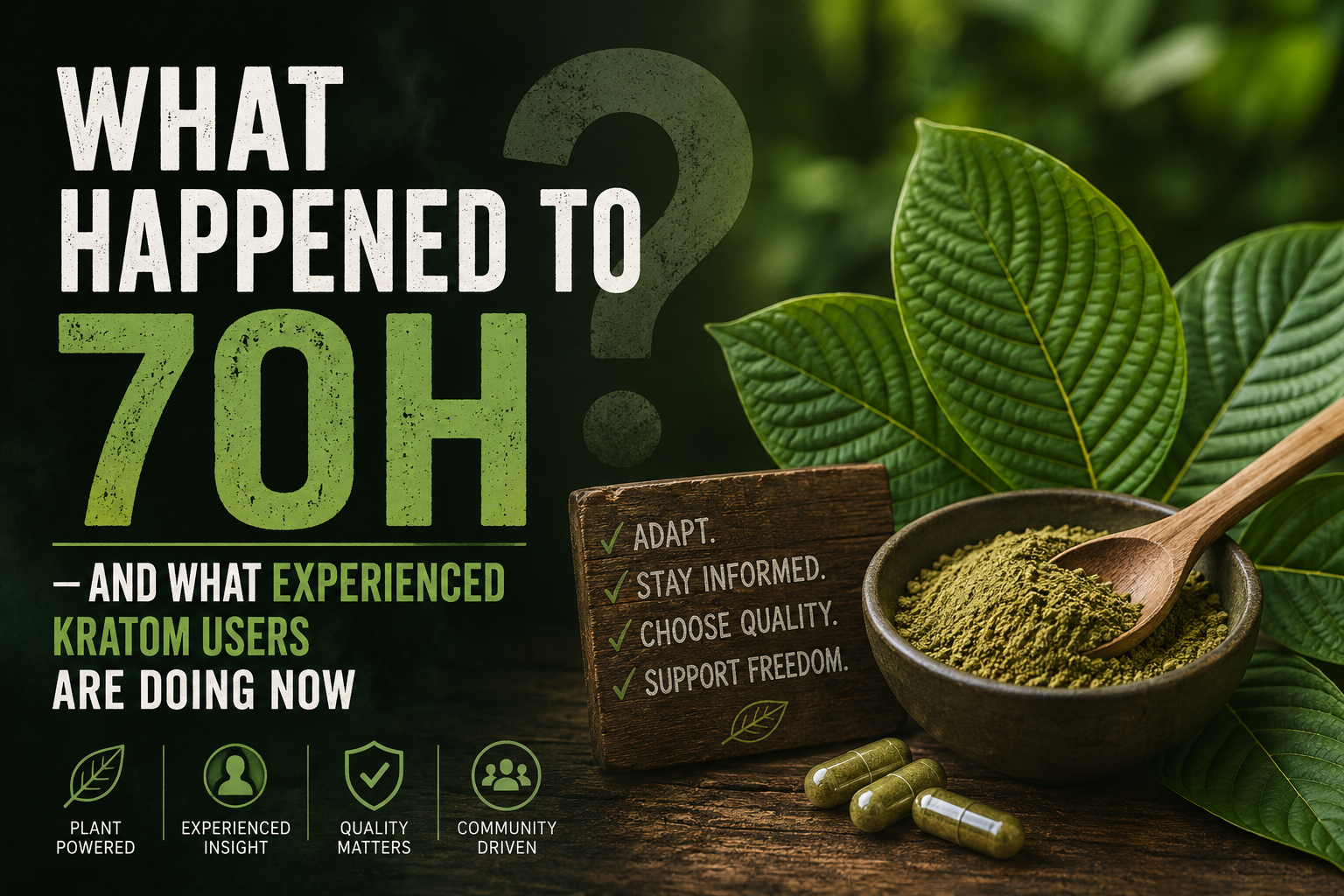
What Happened to 7OH — and What Experienced Kratom Users Are Doing Now
If you’ve been in the kratom extract space for any length of time, 2024 hit differently in Florida.
7-Hydroxymitragynine — the alkaloid behind a huge chunk of the high-potency extract market — got added to Florida’s Schedule I controlled substance list. Overnight, a product category that experienced users had built routines around was no longer legally available in the state.
No warning. No grace period. Just gone.
This post is for the people who actually knew what 7OH was — not casual users, not newcomers — but the extract-focused crowd who understood the alkaloid chemistry and are now trying to figure out what the landscape looks like going forward.
What 7OH Actually Was
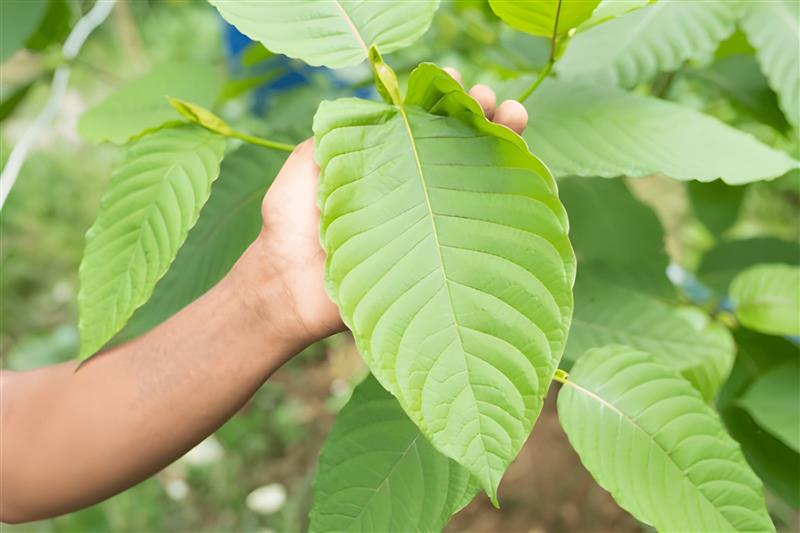
For context: 7-hydroxymitragynine (7OH) is a minor alkaloid that occurs naturally in Mitragyna speciosa leaf at very low concentrations — typically under 1% of total alkaloid content. In raw powder form, it’s barely a factor.
Where it became a major factor was in concentrated extract products. Manufacturers learned to isolate and concentrate 7OH, and the result was a class of high-potency extracts that hit significantly harder than traditional kratom powder at a fraction of the volume. Shots, tablets, chewables — 7OH became the backbone of premium extract SKUs across the industry.
Experienced users gravitated to it for reasons that made sense: consistency, potency, compact format, and a distinct alkaloid profile that differed meaningfully from standard mitragynine-heavy products.
What Florida Did — and Why It Matters
In 2024, Florida added 7-hydroxymitragynine to its Schedule I controlled substance list under Florida Statute 893. That classification puts it in the same legal category as heroin and LSD under state law — meaning possession, sale, and distribution within Florida is a criminal offense.
It’s worth noting that Florida already had kratom-specific legislation on the books. The Florida Kratom Consumer Protection Act (KCPA) had actually legalized kratom for adults 21+ while setting labeling and manufacturing standards — a win for the industry at the time. The 7OH scheduling came separately and targeted the concentrated alkaloid specifically, not kratom leaf or mitragynine broadly.
The practical effect: every vendor selling 7OH-forward extract products into Florida had to pull those SKUs. Smoke shops, online retailers, wholesalers — the product disappeared from legal Florida commerce.
Sarasota County, which had already banned kratom products entirely, remains an additional restriction zone on top of the state-level 7OH rule.
How Experienced Users Responded
Here’s what actually happened in the community once 7OH dried up in Florida — and this is based on what we’ve seen in purchasing patterns and what experienced users are openly discussing in kratom forums and communities:
Some users pivoted back to high-mitragynine extracts. Full-spectrum and mitragynine-concentrated products don’t carry the same legal exposure in Florida. They’re not 7OH, but a well-made full-spectrum extract at meaningful mitragynine concentrations is still a serious product.
Some users started researching next-generation alkaloids. This is where the conversation gets more interesting. The kratom chemistry world didn’t stop at 7OH. Researchers and manufacturers have been working with other kratom-derived alkaloids — compounds that are structurally distinct from 7OH and not subject to the same scheduling.
Some users left the extract market temporarily and went back to powder while waiting to see how things settled.
The common thread across all of it: experienced users don’t just stop. They research, adapt, and find what works within the current legal framework.
Mitragynine Pseudoindoxyl: The Alkaloid Experienced Users Are Looking At
The compound getting the most serious attention in the post-7OH extract conversation is mitragynine pseudoindoxyl (MP).
Let’s be clear about what it is and isn’t:
MP is not 7OH. It is not a synonym, a workaround label, or a marketing rename. Mitragynine pseudoindoxyl is a structurally distinct alkaloid — an oxidative transformation product of mitragynine with its own independent chemical profile. It is not scheduled in Florida. It is a legitimately different compound.
That said, it sits in the same general category of advanced kratom-derived alkaloids that experienced extract users are interested in — high-potency, precise format, distinct from standard leaf-based products.
The research on MP is still developing, but what’s there is generating real interest in the scientific and enthusiast communities. It binds differently than standard mitragynine, and its profile has made it the focus of several newer extract formulations from serious manufacturers.
What a Legitimate MP Product Looks Like
Not all MP products are created equal. The compound is more complex to work with than raw mitragynine, and the refinement process matters enormously for consistency and purity.
What to look for:
Third-party lab testing with accessible COAs. If a vendor can’t show you a Certificate of Analysis from an independent lab, move on. You should be able to verify alkaloid content and confirm purity before you buy.
Named processing methods. Vague “extract” language is a red flag in this category. Serious products will tell you how they’re produced.
Honest dosing information. MP is a high-potency category. Any product that doesn’t give you clear per-tablet or per-serving measurements isn’t being serious with you.
Reputable brand origin. The extract market has a lot of noise. Brands like Real Botanicals that have been operating with transparency standards and lab backing are worth paying attention to.
What BKD Is Carrying Right Now
Bulk Kratom Depot carries the Real Botanicals Pseudoindoxyl (MP) Chewable Tablets — currently one of the only legitimate, lab-tested MP tablet products available from a vendor operating with full transparency standards.
These are 50mg chewable tablets produced using ChromaPure™ processing — a refinement method focused on uniform alkaloid composition and batch-to-batch consistency. They’re wintergreen-flavored, come in blister packs and bottles (3ct up to 50ct), and every batch ships with accessible COA documentation.
Pricing runs $23.50 for a 3-count try-out pack up to $315.99 for the 50-count bulk option.
This is not a beginner product. It’s built for the experienced extract user who knows what they’re looking for and wants a format that delivers consistency without guesswork.
View the Real Botanicals Pseudoindoxyl Tablets at Bulk Kratom Depot →
The Bigger Picture
The 7OH situation in Florida is a case study in how quickly the extract market can shift under regulatory pressure. What experienced users have learned from it is worth paying attention to:
Compound-specific scheduling is real. Regulators are no longer banning “kratom” broadly — they’re targeting individual alkaloids. That means knowing the chemistry of what you’re using matters more than it ever did.
Transparency protects you. Products with clear labeling, COA access, and honest dosing information are the ones that survive regulatory scrutiny. Ambiguous products with vague ingredient lists are the ones that get swept up in crackdowns.
The alkaloid science keeps moving. 7OH isn’t the end of the story — it was one chapter. Mitragynine pseudoindoxyl, and other next-generation kratom alkaloids being studied right now, represent where the serious end of this market is heading.
If you’re an experienced user trying to stay informed and make smart decisions about what you’re using and where you’re buying it, that’s exactly what Bulk Kratom Depot is built for.
Not for use or sale to anyone under 21. These statements have not been evaluated by the FDA. This product is not intended to diagnose, treat, cure, or prevent any disease. Consult a physician before use, especially if you have a medical condition or take prescription medications. Always verify current local regulations before purchasing. Not available in all states — see restricted sales disclosure. Nothing in this post constitutes legal advice.